
English trainer Karl Burke targets a second triumph in the Prix de Diane Longines
On Wednesday, France Galop continued its series of press conferences dedicated to the 2026 edition of the Prix de Diane Longines (Group 1, the highest international level). This great classic of Flat racing, first run in 1843, will take place on Sunday, 14 June 2026, at Chantilly Racecourse.
Run over 2,100 metres, this prestigious contest is restricted to three-year-old fillies. It offers €1 million in prize money.
This second media event highlighted the credentials of the British filly Evolutionist, trained by Karl Burke.
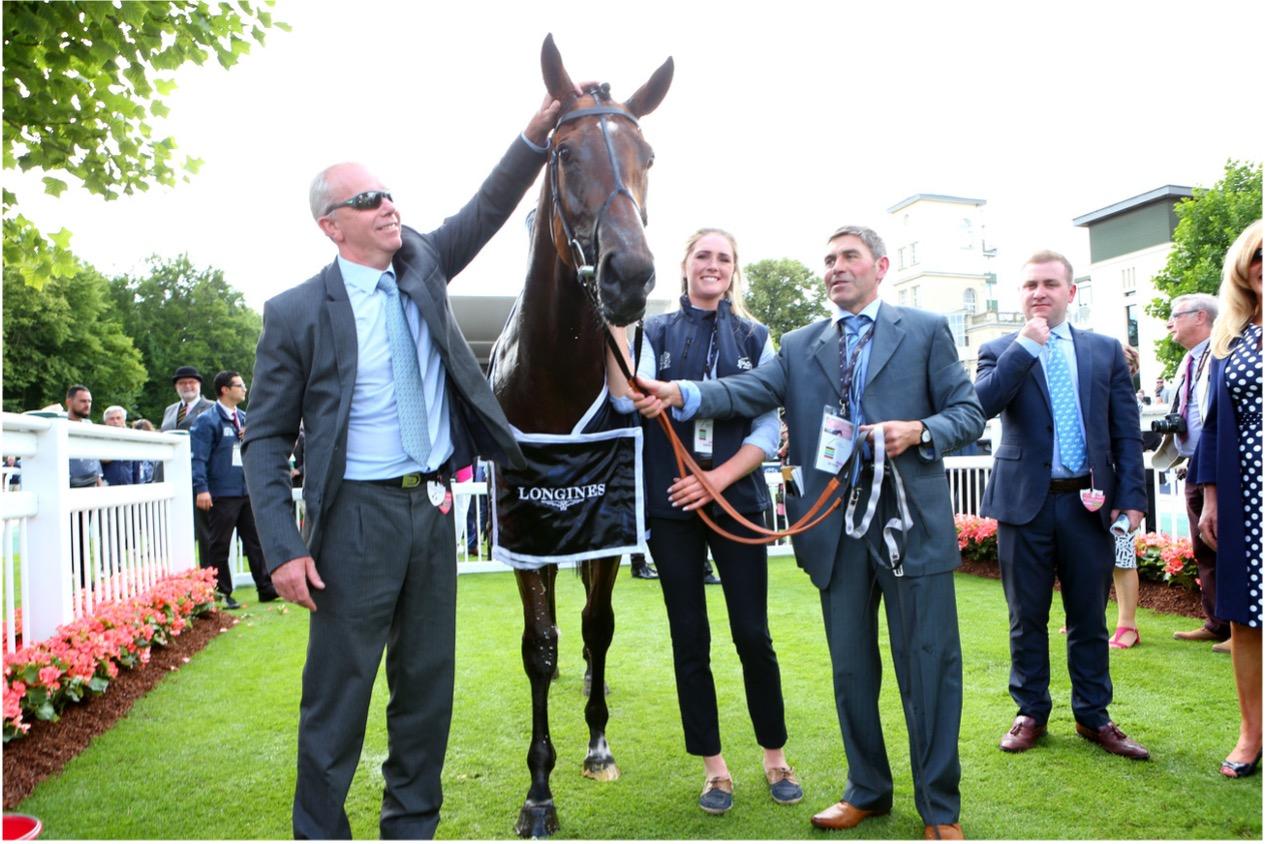
Aged 63, Karl Burke has been a trainer since 1991. He is based in Middleham, Yorkshire, in the north of England. His greatest victory came in the 2018 edition of the Prix de Diane Longines with Laurens (in the photo, credit: Scoop Dyga) , a filly bred in France by François-Melchior Mathet. Before that triumph, she had won another Group 1 in France, the Prix Saint-Alary. She went on to win again the following year at Deauville in the Prix Rothschild, a Group 1 that Karl Burke would win once more in 2025 with Fallen Angel.
More broadly, Karl Burke has enjoyed real success on French soil, as illustrated by Odeliz’s victory in the Prix Jean Romanet in 2015, as well as the wins of Unfortunately and Venetian Sun in the Sumbe Prix Morny, in 2017 and 2025 respectively. His first Group 1 success also came in France, in the 2009 Prix Jean Prat, with Lord Shanakill.
Karl Burke’s comments… on his career
“I think the turning point in my career was in 2013, when we won the Dante with a horse called Libertarian, who went on to finish second in the Derby. That was a real turning point because it came a few years after I had been suspended for a year.
Straight after winning our first Group 1, the Prix Jean Prat at Chantilly with Lord Shanakill, I was suspended for a year. So that basically knocked us off our perch.
To come back and get a Dante winner very quickly was the real turning point. Since then, it has just gone from strength to strength. We had Quiet Reflection at Royal Ascot. She was our first Group 1 winner there. Then we were lucky to have Unfortunately and Havana Grey, who finished first and second in the Morny. And obviously, that was followed by Laurens. The Prix de Diane was our first Classic. It was a fantastic day. We were on an upward curve, but that success certainly propelled us forward even faster and probably put us on the international stage.”
… On Evolutionist, his runner in the Prix de Diane Longines
“Evolutionist, very much like Laurens, was beaten in the English Guineas.
Evolutionist was a very good two-year-old. She was not a Group 1 winner, as Laurens had been, but physically she has done really well through the winter. More importantly, she has done very well physically since the Guineas.
Shane Foley came to ride her in a piece of work yesterday, her last piece of work before Sunday, and he was very taken with her. She is getting stronger all the time.
I think she will get stronger as the year goes on, but she is certainly a stronger filly now than she was in May at Newmarket.
The one difference is that Laurens had another run between the Guineas and the Diane. This filly has not. She had a tough race in the Guineas, as you would expect. Also, she is a different physical type to Laurens. Laurens was powerful and very mature, whereas this filly is still developing and did not carry a lot of weight.
It was a case of either going to Royal Ascot or going for the Prix de Diane. The way she worked yesterday, there was a slight, very slight doubt as to whether we should be going to Royal Ascot over the mile. But we made a decision a while ago, and we took her out of the Coronation at the last forfeit stage.
I slightly regretted that, or at least had a slight question mark in my mind as to whether it was a wise move or not. But look, we are committed to the Prix de Diane. We are 90% confident that she will stay the trip.
We can ride her a little differently. I am sure she will stay the trip and will be able to show a turn of foot at the end of it. But we will not ride her as aggressively as we did in the Guineas.
Diamond Necklace looks hard to beat, but she will be racing on different ground from last time. And above all, you should never fear only one rival!”
… On his love of French Racing
“I have always liked French racing, ever since the first good horse we ever trained, a filly called Daring Destiny. She won the Ayr Gold Cup for us, as well as Listed races. I remember taking her to Evry for a Listed race very early in her career. She finished second; I think she was beaten by a Michael Stoute filly that day.
I like the fact that the prize money is obviously much better than in England, for a start. But when you go there, there are not huge crowds turning up for a drinking session. They are there for the horses. It is up to you to look after your horse, go racing, and, if you want to celebrate, you do it afterwards.
That has always appealed to me. English racing is great, and the crowds can create a brilliant atmosphere. But sometimes people are not there just for the horses; they are there for a day out. Although the crowds are not as big in France, I find that they are racing fans. That is the way I see it.
The French trainers and the French racing people probably see it differently, but I always enjoyed that. I also enjoyed going to the smaller tracks.
There also seems to be a race for every horse. You could find a four-year-old fillies’ claimer somewhere in the programme book.
For moderate horses, or for average English horses, there was always a race you could target. In the early days, we went there with claiming horses.
Obviously, as we have got better horses, the two-year-old races have seemed slightly easier over there. I think it is fair to say that French trainers do not get their two-year-olds going as early as we do over here. So there is always a gap in the programme, I think, for a two-year-old that might struggle to win a Listed race here but can go and be very competitive in France.
I actually did part of the modules to get a French licence when I picked up the suspension. I was pretty disillusioned with racing over here
We thought about putting Spigot Lodge on the market, and we went and viewed property in France. I actually did the modules at the same time as Francis Graffard.
I got to know him a little at that time. But it was not to be and, as it turned out, it was probably the right decision to stay.”