
Grand Critérium History: The top juvenile contest in France
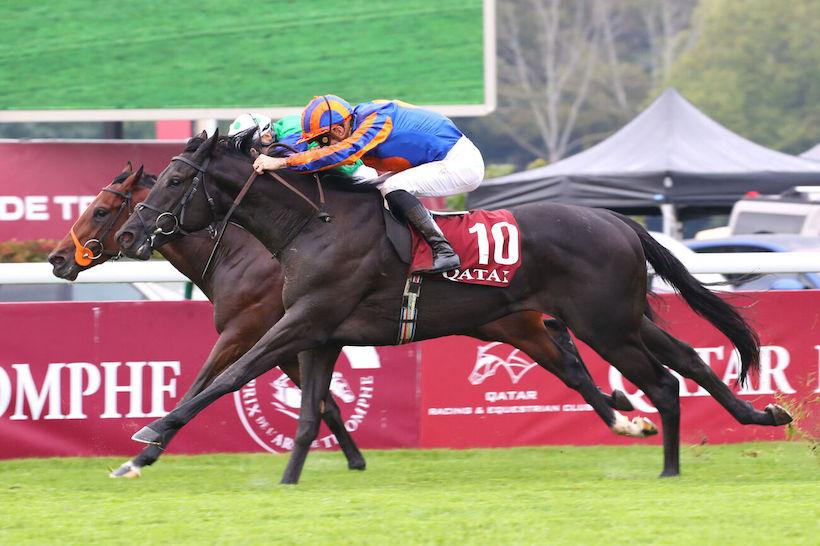
Photo scoopdyga.com
October, ParisLongchamp
QATAR PRIX JEAN-LUC LAGARDÈRE - GRAND CRITÉRIUM
Group1, 2-year-old, 1,400m/7f, €400,000
Created in 1853
Last winner: Camille Pissarro (c2, IRE by Wootton Bassett ex Entreat (Pivotal), owned by Tabor/Smith.Magnier/Brant, bred by CN Farm, trained by Aidan O'Brien, ridden by Christophe Soumillon.
Race records:
- 1,600 meters - Grande piste (main track): 1'37"27 by Ultra in 2015
- 1,600 meters - Moyenne piste (middle track): 1'36"00 by Hula Dancer in 1962
- 1,400 meters - Nouvelle Piste (new track): 1'18"40 by Naaqoos in 2008
2025 marks the 164th running of the race.
The 2024 Edition
ParisLongchamp, France – October 6, 2024 – The 2024 edition of the €400,000 Qatar Prix Jean-Luc Lagardère (Gr1), the championship race for 2-year-olds, contested over 7 furlongs, went to an outsider, Camille Pissarro (Wootton Bassett), who held off a very courageous challenge from Rashabar (Holy Roman Emperor), one of the most gutsy colts of his generation.
Coming into the open stretch at the last moment, Camille Pissarro, sent off at 12/1, seemed to have the race at his mercy. Still, Rashabar, who had appeared beaten halfway down the straight, never stopped progressing after tracking the leaders, and he went on to threaten the winner all the way to the finish, losing by a neck. Third place, almost two lengths further back, went to Misunderstood (Hello Youmzain), the pacesetter.
This was Camille Pissarro's seventh start. A winner on his debut in April, the Coolmore syndicate representative failed to fire as the 4/1 favourite in the Coventry Stakes (Gr2) at Royal Ascot on his next outing. He then partially redeemed himself at the Curragh and Doncaster but did not return to the winner's circle.
Camille Pissarro was purchased for €1.25 million in October last year at Tattersalls by Michael Vincent Magnier and White Birch. His sister by Dark Angel is going through the same sales this month. He is a brother to Golden Horde (Lethal Force), a Group 1 sprinter, and descends from the exceptional Serena's Song and her daughter, Sophisticat.
Jean-Luc Lagardère (1928-2003)
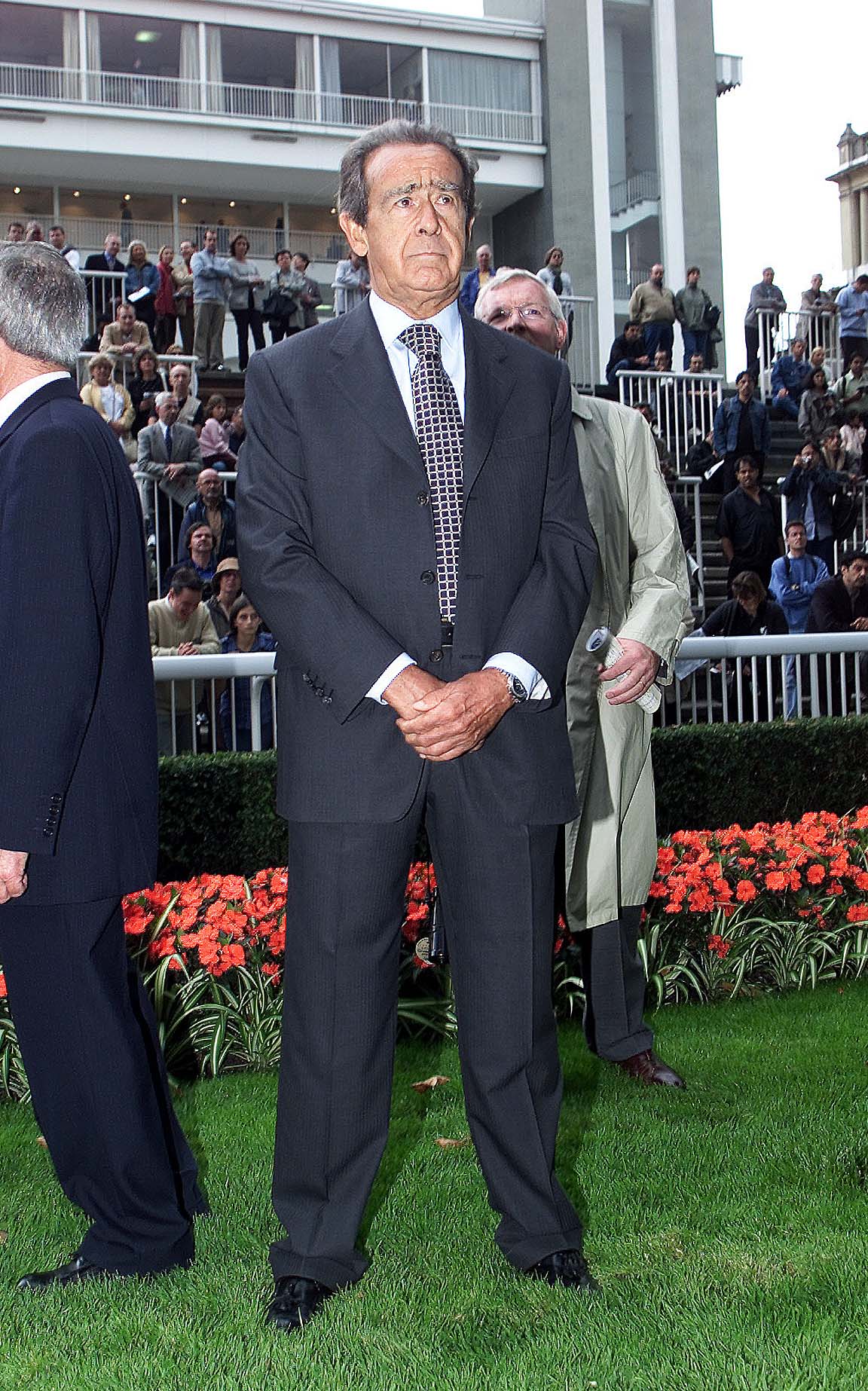 An engineer by training, who became a great captain of industry (head of Hachette, Matra, and companies in the aeronautics and defense sectors), Jean-Luc Lagardère was also one of the most eminent personalities in Thoroughbred racing and breeding in France, as a breeder, owner, and leader.
Passionate about racing and breeding, he bought a yearling filly at the Deauville sales in 1966 and then another in 1967, Reine des Sables, who, a good winner, would become the granddam of Resless Kara, winner of the Prix de Diane in 1988. In 1969 at the Newmarket sales, he acquired his first broodmare, Lutine (future granddam of Linamix), whom he installed in Normandy at Haras du Val Henry (near Livarot), which he had created in 1967. Thus were laid the foundations of a breeding operation that would expand a few years later, with the acquisition in July 1981 of a historic estate, Haras d'Ouilly, where the high-quality horses of François Dupré were born.
Nearly three decades after his debut, Jean-Luc Lagardère became the No. 1 French breeder, having reached first place in 1988 – a position he would hold eleven more times until 2005. In 1995, he achieved his dream. His homebred Linamix, a classic winner in 1990 (Poule d'Essai des Poulains), sired a Group 1 winner in his first crop, Miss Satamixa (Prix Jacques Le Marois). It was the first jewel in an extraordinary and astonishing production. It was also the realization of a program that the breeder had set for himself. Admittedly, with a little delay, which he explained: "With hindsight, I would say that it is easier to be first in the field of technology than in that of breeding, because there are fewer unknowns. The work of crossbreeding, and the success that may follow, is a kind of balance between the fruit of your reflection and that of your observation."
In that same year, 1995, on May 3, Jean-Luc Lagardère was elected president of a single governing body for flat racing, "France Galop, Société d'Encouragement pour l'Amélioration des Races de Chevaux de Galop en France." He did not seek the position. This sixty-seven-year-old man, silent but an attentive observer of the racing world of which he had become one of the main players, was called to the rescue. The new president took up the challenge of facing the difficulties that beset the racing institution. He assured that he had not accepted his mandate "to manage an inexorable decline." His credo: "Racing in France represents a fantastic asset." And he affirmed that "the business can be turned around and saved, and even promoted, provided that we speak with one voice," with the will "on all points to make things change" and to "re-establish a true partnership with the State," driven as we all are "by the passion we want to serve."
At the head of France Galop, Jean-Luc Lagardère would ensure the sustainability of French racing by drawing inspiration from a new vision. What changes occurred during his eight years as president! He reconciled flat racing with trotting, which some had unfortunately opposed. Advocating expansion, he promoted the decentralization of racing, establishing regional centers with the support of local authorities. He helped transform a sleepy PMU into a dynamic commercial enterprise, injecting into the racing industry the resources needed to revitalize a precarious state of health. He brought racing to television screens, expanding its audience to a new public, while satisfying the regulars.
This transformation was carried out with the consent of the committee members – from very diverse backgrounds and representing multiple interests – who were ready to grant him a third term as president at the end of 2003. All this thanks to the listening skills and entrepreneurial spirit of the president of France Galop, who was intensely and passionately involved in the basic activity of racing, breeding.
The crowning achievement of Jean-Luc Lagardère's equestrian activity was 1998, which saw his horse Sagamix win the Prix de l'Arc de Triomphe and his homebred Linamix rank first among stallions, while he himself reached the top of the owners' and breeders' standings.
In the colors gray silks, pink cap (formerly those of François Dupré), adopted in 1986, Jean-Luc Lagardère's horses won twelve Group 1 races: in 1988, the Prix de Diane (Resless Kara), in 1990 the Poule d'Essai des Poulains (Linamix), in 1995 the Prix Jacques Le Marois (Miss Satamixa), in 1996 the Prix Saint-Alary (Luna Wells), in 1998 the Grand Prix de Saint-Cloud (Fragrant Mix) and the Prix de l'Arc de Triomphe (Sagamix), in 1999 the Grand Prix de Paris (Slickly) and the Prix Royal Oak (Amilynx), in 2000 again the Prix Royal Oak (Amilynx) and the Critérium de Saint-Cloud (Sagacity), in 2001 the Poule d'Essai des Poulains (Vahorimix) and the Prix Jacques Le Marois (Vahorimix).
Four other Group 1 races were won by Haras d'Ouilly graduates after being sold to different owners: in 1992 the Prix du Jockey Club (Polytain), in 2001 the Prix du Moulin de Longchamp (Slickly) and the Breeders' Cup Mile (Val Royal), and in 2003 the Prix Ganay (Fair Mix).
Finally, just two months after the death of Jean-Luc Lagardère, his homebred Clodovil won the Poule d'Essai des Poulains (Group 1) in the colors gray silks, pink cap, taken over by the "Lagardère Family." These colors shone again in 2004 with three quality colts, Diamond Green (2nd Poule d'Essai des Poulains, St James's Palace Stakes, Prix du Moulin de Longchamp), Valixir (3rd Prix du Jockey Club), and Cherry Mix (Grand Prix de Deauville, 2nd Arc de Triomphe). But in the spring of 2005, the Lagardère breeding operation was sold en bloc to the Aga Khan. Although the colors (gray silks, pink cap) disappeared, Haras d'Ouilly graduates continued to distinguish themselves at the highest level, winning four Group 1 races with Valixir (Prix Ganay, Queen Anne Stakes), Vadawina (Prix Saint Alary), and Carlotamix (Critérium International).
History
Created in 1853 at Chantilly under the name Grand Critérium, it took the name Prix Jean-Luc Lagardère in 2003, in tribute to the president of France Galop who died suddenly at the beginning of the year, on March 14. Transferred to Longchamp in 1857. Not run in 1870, from 1914 to 1918, in 1939 and 1940. Run in 1943 and 1944 at Tremblay. Originally contested over 1,500 meters, its distance was increased to 1,600 meters in 1864. It was reduced to 1,400 meters in 2001, then increased again to 1,600 meters in 2015.
It has been held over 7 furlongs since 2020.
It is the oldest and most richly endowed race for 2-year-olds in France, therefore the most sought-after and the most famous. A happy omen, the name of its first winner in 1853 was Celebrity!
Run at the end of September or the beginning of October, it was always considered the flagship race for a 2-year-old. In 1900, it offered 30,000 francs to the winner. This was more than the other races reserved for 2-year-olds, whose autumn calendar was already very full.
The race was run at Chantilly in 2016 and 2017 during the construction work at Longchamp, which it returned to in 2018.
Dead-Heats
Twice the finish resulted in a dead-heat. In 1879, a second race was run, in which Basilique beat his rival Louis d'Or by a neck. In 1941, Marcel Boussac and Ernest Masurel, respective owners of Nosca and Martia, decided to share the prize.
Fields
Smallest fields: 3 runners in 1857, 1858, 1861, and 1999; 4 runners in 1891, 1905, and 1994; largest fields: 19 runners in 1873 and 1926; 18 runners in 1875, 1879, and 1880.
The Fillies
Of the 164 winners of the Grand Critérium (one dead-heat in 1941) since its creation in 1853, 37 have been fillies (23%). But the distribution is uneven: 19 winners out of 60 races between 1853 and 1913 (32%); 6 winners out of 20 races from 1919 to 1938 (30%); but only 12 winners out of 78 between 1941 and 2017. After an absence from the roll of honor dating back to the victory of Danishkada in 1986, a filly won again 30 years later in 2017: Happily, whose full brother Gleneagles had been demoted from the 2014 edition that he had won on the track!
Without wanting to mention all these precocious heroines who defeated the males, here are those who confirmed their great talent at age 3:
- Seven won the Poule d'Essai des Pouliches: Isabella (1860), Stradella (1861), May Pole (1888), Roxelane (1896), Sauge Pourprée (1907), Caravelle (1942), and Apollonia (1955).
- Seven won the Prix de Diane: Stradella, Sornette (1869), Roxelane, Dorina (1925), Mistress Ford (1935), Caravelle, and Apollonia.
- Three won the Prix Vermeille: Durban (1920), Dorina, and Mistress Ford.
- One won the Grand Prix de Paris: Sornette.
- Two won the 1000 Guineas: Bella Paola (1957) and Hula Dancer (1962).
- One won the Oaks: Bella Paola.
The most successful (with two classic victories at age 3) are Stradella, Sornette, Roxelane, Dorina, Mistress Ford, Caravelle, Apollonia, and Bella Paola.
Classic Careers
The male winners of the Grand Critérium have sired the winners of the following classic races:
- Poule d'Essai des Poulains: Revigny (1871), Vinicius (1902), Val d'Or (1904), Ouadi Halfa (1906), Indus (1930), Brantôme (1933), Rigolo (1947), Tantième (1949), Right Royal (1960), Neptunus (1963), Soleil (1965), Blushing Groom (1976), Irish River (1978), Recitation (1980), Kendor (1988), Hector Protector (1990), American Post (2004), Karakontie (2013).
- Prix du Jockey Club: Celebrity (1853), Revigny (1871), Jongleur (1876), Stuart (1887), Sicambre (1950), Right Royal (1960), Hard to Beat (1971).
- Grand Prix de Paris: Stuart (1887), Rueil (1891), Dolma Baghtché (1893), Kéfalin (1921), Sicambre (1950), Fijar Tango (1987).
- Prix de l'Arc de Triomphe: Kantar (1927), Brantôme (1933), Tantième (1949).
Not so Classic Careers
- Mlle de Fligny (1868), winner of ten races (at Deauville, Moulins, Nevers, Longchamp, Marseille, Bordeaux, and Baden-Baden) out of twelve attempts at age 2, a record that was not surpassed until 1957 by Texana, who won all eleven of her races.
- Swift (1878), winner of nine races out of ten, failing only (third) against his elders in the Prix de la Forêt.
- Holocauste (1898), full brother to Gardefeu (Prix du Jockey Club), who broke a leg in the Epsom Derby when he seemed to be dominating the future winner Flying Fox.
- Prestige (1905), unbeaten in his seven races at age 2, as he would remain at age 3 in nine starts. He was the first 2-year-old to achieve the perfect quartet of Omnium de Deux Ans-Morny-Grand Critérium-La Forêt.
- Epinard (1922), the fastest horse bred in France. Left at the start in the Prix Morny, Pierre Wertheimer's colt won the other six races he contested at age 2, taking off like a rocket and never being caught.
- Pantalon (1932), whose victory in the Grand Critérium was his seventh success of the year out of eleven attempts. Small, smeared with white, his breeder Jean Stern had parted with him on March 29 after a claiming race. The first buyer, Guy de Mola, got rid of him on June 6 after another victory in a claiming race. The astute buyer was trainer David Englander. At age 3, Pantalon would finish third in the Prix de l'Arc de Triomphe!
We cannot finish without mentioning the name of the most famous of the beaten horses in the Grand Critérium: Sea Bird. It was the only defeat of his career. Finding his balance late, he had unleashed a good turn of foot but could not catch his training companion Grey Dawn, seasoned in competition after having won the Prix Morny and the Prix de la Salamandre. That was in 1964.
Propriétaires
- Sue Magnier (9 wins): *Second Empire (1997), *Ciro (1999), **Rock of Gibraltar (2001), *Hold That Tiger (2002), *Oratorio (2004), ***Horatio Nelson (2005), Holy Roman Emperor (2006), Happily* (2017), ****Camille Pissarro (2024).
- Marcel Boussac (8 wins): Durban (1920), Nosca (1941, dead-heat), Caravelle (1942), Priam (1943), Nirgal (1945), Ambiorix (1948), Apollonia (1955) and Abdos (1961). On peut aussi lui associer la victoire de Clavières (1923) sous les couleurs de Mlle Fanny Heldy, sa future épouse.
- Famille Rothschild (8 wins): Flamant (1926), Godiche (1929), Brantôme (1933), Téléférique (1936), Dragon Blanc (1952), Le Géographe (1953), Soleil (1965) and Mariacci (1974).
- Edmond Blanc (7 wins): Révérend (1890), Rueil (1891), Marly (1892), Cazabat (1897), Vinicius (1902), Val d'Or (1904) and Ouadi Halfa (1906).
- Frédéric de Lagrange (5 wins): Nuncia (1858), Sonchamp (1863), Le Béarnais (1864), Montgoubert (1866) and Le Sarrazin (1867).
- Paul Aumont (5 wins): Damier (1862), Mlle de Fligny (1868), Revigny (1871), Fra Diavolo (1883) and Alger (1885).
* with Michael Tabor ; ** with Sir Alex Ferguson, *** with Mrs David Nagle ; **** with MM. Tabor, Smith and Brant.
Trainers
- Henry Jennings (10 wins): Miss Cath (1855), Duchess (1856), Isabella (1860), Stradella (1861), Czar (1865), Revigny (1871), Jonquille (1875), Jongleur (1876), Mantille (1877) and Basilique (1879).
- Aidan O’Brien (9 wins): Second Empire (1997), Ciro (1999), Rock of Gibraltar (2001), Hold That Tiger (2002), Oratorio (2004), Horatio Nelson (2005), Holy Roman Emperor (2006), Happily (2017), Camille Pissarro (2024).
- Etienne Pollet (7 wins): Tyrone (1956), Tiepoletto (1958), Right Royal (1960), Hula Dancer (1962), Neptunus (1963), Grey Dawn (1964) and Silver Cloud (1966).
- Robert Denman (6 wins): The Condor (1884), Frapotel (1886), Vinicius (1902), Val d'Or (1904), Ouadi Halfa (1906) and Ptolemy (1924).
- André Fabre (6 wins): Jade Robbery (1989), Goldmark (1994), Loup Solitaire (1995), Ultra (2015), Victor Ludorum (2019), Belbek (2022).
- Christiane Head-Maarek (5 wins): Saint Cyrien (1982), Okawango (2000), American Post (2003), Full Mast (2014), National Defense (2016).
- Tom Jennings (5 wins): Nuncia (1858), Sonchamp (1863), Le Béarnais (1864), Montgoubert (1866) and Le Sarrazin (1867), les cinq chevaux du comte de Lagrange .
- Charles Semblat (5 wins): Nosca (1941, dead-heat), Caravelle (1942), Priam (1943), Nirgal (1945) and Ambiorix (1948).
Riders
- George Stern (6 wins): Vinicius (1902), Ob (1903), Val d'Or (1904), Ouadi Halfa (1906), Durban (1920) and Clavières (1923) ;
- Roger Poincelet (6 wins): Ambiorix (1948), Cosmos (1951), Tiepoletto (1958), Right Royal (1960), Hula Dancer (1962) and Yelapa (1968).
- Jacques Doyasbère (5 wins): Nosca (1941, dead-heat), Caravelle (1942), Priam (1943), Nirgal (1945) and Rigolo (1947).
- Edgar Rolfe (4 wins): Mantille (1877), Vigilant (1881), Vernet (1882) and Alger (1885).
- Mickaël Barzalona (4 wins): Ultra (2015), Victor Ludorum (2019), Sealiway (2020), Belbek (2022).