
Critérium des Pouliches-Marcel Boussac History: The Great Fillies
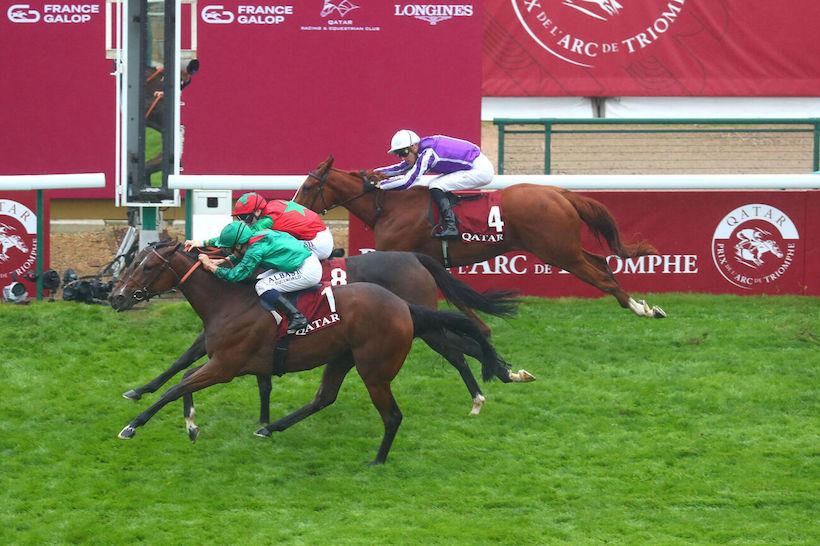
Photo scoopdyga.com
ParisLongchamp, France - October
QATAR PRIX MARCEL BOUSSAC - CRITÉRIUM DES POULICHES
Group 1, 2-year-old fillies, 1,600 meters, €400,000 Created in 1969
2023 Winner: Vertical Blue (f2, IRE by Mehmas ex Krunch (Sea the Stars), owned by Gemini Stud, Argella Racing, bred by Haras du Mont dit Mont, trained by Francis-Henri Graffard, ridden by Alexis Pouchin.
Race Record (Longchamp): 1'34"90 in 2006 by Finsceal Beo. Wuheida won in 1'35"85 in 2016 on the Chantilly track.
2025 marks the 57th running of the race.
The 2024 Edition
Sunday, October 6, 2024, ParisLongchamp Racecourse (Paris). – The heavy favorite in the Qatar Prix Marcel Boussac – Critérium des Pouliches (Gr1), Zarigana (Siyouni), came from off the pace to take the lead from pacesetter Exactly (Frankel), but she lost the benefit of her effort in the final strides when her stablemate, Vertical Blue (Mehmas), trained by Francis-Henri Graffard, caught her by a nose.
Prior to this 30/1 upset, Vertical Blue had broken her maiden in her third start at Clairefontaine, then finished second to Madero in the Critérium de Lyon (L) after closing from too far back.
The winning filly is owned by Gemini Stud of the Teboul family and Argella Racing. She was bred by Haras du Mont dit Mont and purchased for €50,000 by Paul Nataf at the Deauville sales. She is out of Krunch (Sea the Stars), a winner at Dax and Bordeaux who was trained by Xavier Thomas-Demeaulte, the big winner in Arabian Thoroughbred racing this week. Her pedigree traces back to the Lagardère breeding program.
Marcel Boussac (1889-1980)
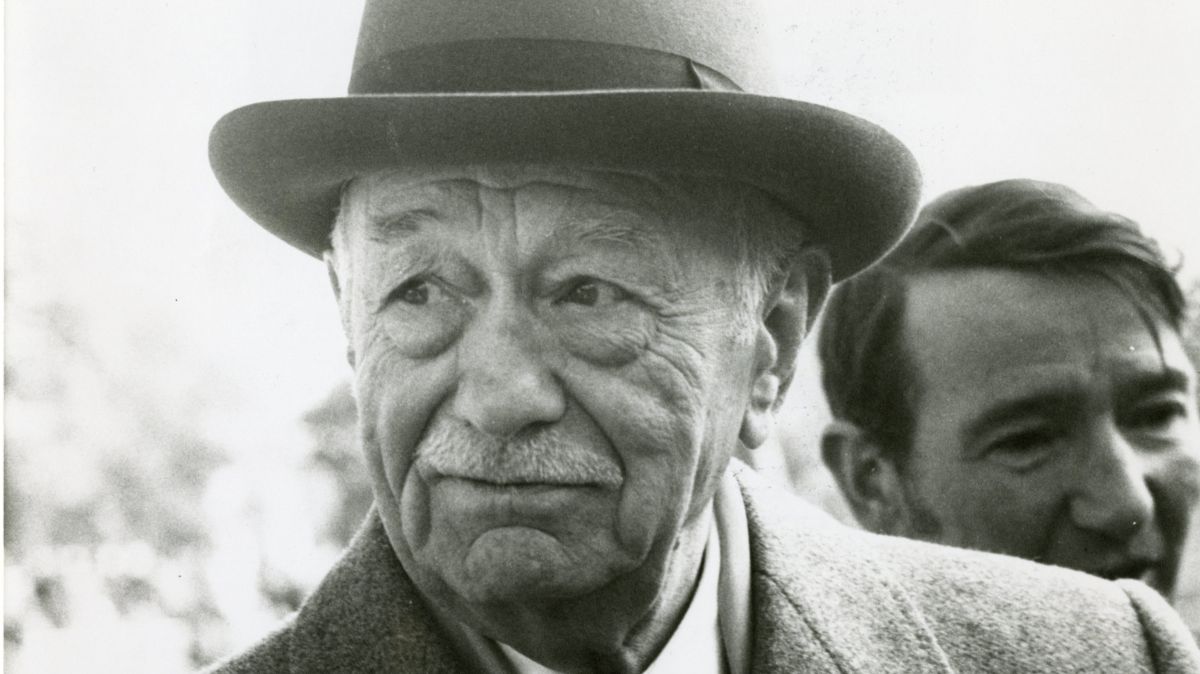 A major figure in the textile industry, Marcel Boussac was also one of the most eminent personalities in Thoroughbred racing and breeding in France, as a breeder, owner, and leader.
Immediately after the First World War, in 1919, he established a large racing stable – with the colors orange silks, gray cap – and set up his breeding operation in Orne at Haras de Fresnay-le-Buffard, near Argentan. He was immediately successful, highlighted by the victory of his horse Ramus in the 1922 French Derby, the Prix du Jockey Club. This race, the most prized by breeders, was won by Marcel Boussac eleven more times, his twelfth winner being Acamas in 1978. This constitutes the record for an owner, as do the six victories achieved by his horses in the Prix de l'Arc de Triomphe, another flagship event on the French racing calendar.
Among Marcel Boussac's best horses were Tourbillon (1928), Corrida (1932), Pharis (1936), Djebel (1937), Marsyas (1940), Ardan (1941), Coaraze (1942), Caracalla (1942), Arbar (1944), Ambiorix (1946), Coronation (1946), Scratch (1947), Auriban (1949), and Apollonia (1953). In 1950, Marcel Boussac won the Epsom Derby with his homebred Galcador. One of his friends said, "It is easier to become a billionaire than to win the Epsom Derby. Marcel Boussac has done both."
During the Second World War, as his breeding operation expanded, Marcel Boussac added a second stud farm, Haras de Jardy (in Marnes-la-Coquette, near Versailles), which he bought from the heirs of its founder, Edmond Blanc, another of the greatest owner-breeders at the beginning of the century.
The French record of Marcel Boussac's horses – limited here to Group 1 races – is summarized below. The name of each prize is followed by the number of victories, with an R attached signifying that this number constitutes the record for the race: Arc de Triomphe 6R, Cadran 8, Critérium de Saint-Cloud 1, Diane 5, Forêt 9R, Ganay 6R, Grand Critérium 8R, Grand Prix de Paris 2, Grand Prix de Saint-Cloud 5R, Ispahan 8, Jacques Le Marois 10R, Jean Prat 4, Jockey Club 12R, Lupin 7R, Morny 13R, Poule d'Essai des Poulains 1, Poule d'Essai des Pouliches 9R, Royal Oak 4, Vermeille 7R.
In Europe, Marcel Boussac's horses also triumphed at the major racecourses:
- Epsom: Derby Stakes: Galcador (1950); Oaks Stakes: Asmena (1950); Coronation Cup: Ardan (1946) and Goyama (1948).
- Newmarket: Two Thousand Guineas: Djebel (1940); Middle Park Stakes: Abjer (1935) and Djebel (1939); Cheveley Park Stakes: Djerba (1946) and Corejada (1949): Dewhurst Stakes: Emperor (1949) and Marsyad (1951); Champion Stakes: Astérus (1927), Goyescas (1931), Djeddah (1949), and Dynamiter (1951, 1952); Jockey Club Stakes: Pardal (1951) and Kurun (1956); Princess of Wales's Stakes: Nirgal (1947) and Pardal (1951); Houghton Stakes: Golestan (1947) and Auriban (1951); Newmarket St Leger: Anubis (1950); Newmarket Oaks: Caramida (1960), Pharisienne (1954), and Janiari (1956).
- Doncaster: St Leger Stakes: Scratch (1950) and Talma (1951); Doncaster Cup: Marsyas (1946); Scarbrough Stakes: Pharaos (1952).
- Royal Ascot: Gold Cup: Caracalla (1946), Arbar (1948), Elpenor (1954), and Macip (1956); St James's Palace Stakes: Goya (1937); Hardwicke Stakes: Goyescas (1932), Corrida (1936), Priam (1946), Nirgal (1947), and Dynamiter (1952); Queen Anne Stakes: Argur (1953); Queen Mary Stakes: Coronation (1948); Ribblesdales Stakes: Esquilla (1952); Chesham Stakes: Djerid (1947); Queen Alexandra Stakes: Marsyas (1946); Royal Hunt Cup: Astérus (1927); Gold Vase: Estoc (1948).
- Ascot: King George VI Stakes: Arbar (1947) and Marveil (1949); Diadem Stakes: Djelal (1947); Knights' Royal Stakes: Djelal (1948); Princess Elizabeth Stakes: Djelfa (1950) and Arbèle (1951); Princess Margaret Stakes: Pareo (1951); Princess Royal Stakes: Divinalh (1950); Cumberland Lodge Stakes: Talma (1951); Sunninghill Park Stakes: Shaker (1954); Blue Seal Stakes: Paraïba (1954).
- Chester: Ormonde Stakes: Goyama (1948).
- Goodwood: Goodwood Cup: Marsyas (1946).
- Hurst Park: White Rose Stakes: Marsyas (1946); Winston Churchill Stakes: Nirgal (1948, 1949); Gainsborough Stakes: Nyangal (1950).
- Lincoln: Lincolnshire Handicap: Leonidas (1930).
- Sandown Park: Eclipse Stakes: Djeddah (1949) and Argur (1953); Solario Stakes: Scratch (1949).
- York: Gimcrack Stakes: Goya (1936) and Cortil (1950); Great Yorkshire Stakes: Nirgal (1948) and Pardal (1951).
- The Curragh: Irish Oaks Stakes: Corejada (1950).
- Baden-Baden: Grosser Preis von Baden: Dadji (1937); Zukunfts Rennen: Tourbillon (1930) and Canzoni (1938).
- Berlin-Hoppegarten: Grosser Preis der Reichshaupstadt: Corrida (1937).
- Ostend: Grand International d'Ostende: Corrida (1936, 1937); Grand Prix d'Ostende: Nirgal (1947); Grand Critérium d'Ostende: Durban (1920), Zariba (1921), and Sémiramide (1938).
In France, Marcel Boussac topped the annual owners' standings 14 times: from 1939 to 1949, in 1952, 1955, and 1956. In the breeders' standings, he did even better, taking first place 17 times: from 1939 to 1949, in 1951 and 1952, from 1954 to 1956, and in 1974.
Across the Channel, in the combined standings for England and Ireland, he ranked first as both owner and breeder twice, in 1950 and 1951, a feat achieved only once before by a Frenchman, Count Frédéric de Lagrange, in 1865 thanks to Gladiateur.
Marcel Boussac was elected a member of the committee of the Société d'Encouragement for the Improvement of Horse Breeds in France in 1933. In 1945, he was appointed a member of the subcommittee, where he played a leading role. And on December 8, 1959, he was elected president of this parent company for flat racing, created on November 11, 1833. He was the first commoner to accede to this presidency, which had previously been held by a member of the Jockey Club, the most exclusive circle in Paris. Marcel Boussac dusted off "the old lady of the Rue du Cirque" and transformed it into a structured company with the help of Jean Romanet, to whom he entrusted the general management. He codified with a view to international harmonization. He raised French racing to the rank of an international industry, despite the financial obstacles constantly placed before it by a greedy state. His reign lasted fifteen years, until December 12, 1974. Then eighty-five years old, he decided not to seek a new term.
Due to the reputation he acquired – thanks to the resounding victories of his horses in English races almost continuously from 1946 to 1953 – Marcel Boussac exported a large number of his horses around the world, to countries eager to rebuild their breeding stock with new bloodlines. His main ambassador was Tourbillon, who established a successful line throughout the world.
In early July 1978, Marcel Boussac was forced to sell the two hundred or so horses that made up his racing stable and breeding operation. For 41 million francs, Prince Karim Aga Khan acquired the largest share, Acamas and 143 other horses. For the buyer, it would be a fantastic deal. The treasure was not Acamas (valued at 27 million in the transaction). It was hidden among the 143 other horses (estimated at a total of 14 million) acquired for almost half the price. It was a bargain. Acamas would be a disappointment, proving to be infertile. In the lot, a foal, Akarad, would win the Grand Prix de Saint-Cloud for the Aga Khan in 1981. And the following year, 1982, Akiyda, Akarad's full sister, would give him his first Arc de Triomphe. The Boussac broodmare band, the object of rigorous selection for half a century, did indeed contain seeds bearing flowers ready to bloom. The Aga Khan would be indebted to it for at least four champions, Darshaan, Daylami, Sinndar, and Dalakhani.
History
Created in 1969 under the name Critérium des Pouliches, it took the name Prix Marcel Boussac in 1980, after his death at the beginning of the year.
Until 1968, there was no major race reserved for 2-year-old fillies. At the highest level, they were obliged to compete against males, against whom they performed well (see Grand Critérium). But, over the years, they avoided confrontation more and more often. Hence the creation in 1969 of a race reserved for them, richly endowed and run over the same course as the traditional Grand Critérium, which remains open to the boldest.
Often, despite competition from other similar races, the Prix Marcel Boussac designates the best 2-year-old filly in Europe.
Run on the main track since 1987. Smallest fields: 6 runners in 1994, 7 in 1983; largest fields: 17 runners in 1971, 1973, and 1975; 16 in 1972 and 2003.
Between 1999 and 2007, the Prix Marcel Boussac benefited from a partnership with the Barrière group. From 2008 to 2017, it was sponsored by the Total group as part of the Qatar Prix de l'Arc de Triomphe weekend, and Qatar has been associated with it again since then.
The race was run at Chantilly in 2016 and 2017 during the construction work at Longchamp, which it returned to in 2018.
Notable Careers
A gauge of quality at age 2, a victory in the Prix Marcel Boussac does not guarantee a classic career at age 3.
In forty-five years, only five winners have managed to win the Poule d'Essai des Pouliches the following year: Allez France (1973), Aryenne (1980), Miesque (1987), Divine Proportions (2004), and Zarkava (2008). And of the five, only Allez France, Divine Proportions, and Zarkava triumphed in the Prix de Diane, the other two having to settle for second place.
Four other Prix Marcel Boussac winners confirmed their quality by winning the Prix Vermeille at age 3: Kamicia (1977), Salsabil (1990), Sierra Madre (1994), and Zarkava (2008). And three others distinguished themselves across the Channel, Salsabil (1989) and Shadayid (1990) having won the 1000 Guineas at Newmarket, and Misty For Me having won the Irish 1,000 Guineas at the Curragh. Salsabil deserves a special mention because at age 3, in addition to the 1000 Guineas and the Prix Vermeille, she won the Oaks as well as the Irish Derby, which had not been won by a filly since 1900. Finally, two other Prix Marcel Boussac winners would make a name for themselves: the 1984 winner, Triptych, who would add eight other Group 1 races to her record; and the 2002 winner, Six Perfections, who, after two unfortunate failures in the spring in the Guineas at Newmarket and then at the Curragh, confirmed her great quality by winning the Prix Jacques Le Marois at Deauville in August.
In recent years, three Prix Marcel Boussac winners have distinguished themselves by winning a Group 1 race the following year: Elusive Kate (Prix Rothschild 2012) and Silasol (Prix Saint Alary 2013). In this list, Found, winner of the Prix Marcel Boussac in 2014, is a phenomenon in her own right. She subsequently accumulated no less than ten second-place finishes in Group 1 races, but she won three more: the Breeders' Cup Turf twice, and the Qatar Prix de l'Arc de Triomphe, in 2016 at Chantilly!
Leading Owners
- Niarchos Family (6 wins): Miesque (Stavros Niarchos, 1986), Six Perfections (2002), Denebola (2003), Divine Proportions (2004), Rumplestiltskin (2005, with Susan Magnier and Michael Tabor), and Albigna (2019).
- Michael Tabor & Susan Magnier (5 wins): Rumplestiltskin (2005, with the Niarchos family), then with Derrick Smith Misty For Me (2010), Found (2014), Ballydoyle (2015), Opera Singer (2023).
- Wertheimer Family (4 wins): Gold Splash (Jacques Wertheimer, 1992), Juvenia (Wertheimer & Frère, 1998), Silasol (2012), and Indonésienne (2013).
- Hamdan Al Maktoum (3 wins): Ashayer (1987), Salsabil (1989), and Shadayid (1990).
- Daniel Wildenstein (2 wins): Allez France (1972) and Miss Tahiti (1995).
- Khalid Abdullah (2 wins): Ryafan (1996) and Proportional (2008).
- Karim Aga Khan (2 wins): Zarkava (2007) and Rosanara (2009).
Leading Trainers
- Christiane Head-Maarek (5 wins): Gold Splash (1992), Macoumba (1994), Loving Claim (1997), Juvenia (1998), and Proportional (2008).
- Pascal Bary (5 wins): Sierra Madre (1993), Amonita (2000), Six Perfections (2002), Denebola (2003), and Divine Proportions (2004).
- Aidan O'Brien (5 wins): Rumplestiltskin (2005), Misty For Me (2010), Found (2014), Ballydoyle (2015), and Opera Singer (2023).
- François Boutin (3 wins): Tarona (1977), Play it Safe (1981), and Miesque (1986).
- John Dunlop (3 wins): Ashayer (1987), Salsabil (1989), and Shadayid (1990), all three fillies owned by Sheikh Hamdan Al Maktoum.
- John Gosden (3 wins): Ryafan (1996), Sulk (2001), and Elusive Kate (2011).
Leading Jockeys
- Lester Piggott (3 wins): Vela (1969), Play it Safe (1981), and Midway Lady (1985).
- Yves Saint-Martin (3 wins): Allez France (1972), Theia (1975), and Aryenne (1979).
- Alain Lequeux (3 wins): Tropicaro (1980), Triptych (1984), and Mary Linoa (1988).
- Willie Carson (3 wins): Ashayer (1987), Salsabil (1989), and Shadayid (1990).
- Olivier Peslier (3 wins): Miss Tahiti (1995), Lady of Chad (1999), and Silasol (2012).
- Ryan Moore (3 wins): Found (2014), Ballydoyle (2015), and Opera Singer (2023).
- Freddy Head (2 wins): Miesque (1986) and Macoumba (1994).
- Gérald Mossé (2 wins): Gold Splash (1992) and Sierra Madre (1993).
- Lanfranco Dettori (2 wins): Ryafan (1996) and Sulk (2001).
- Olivier Doleuze (2 wins): Loving Claim (1997) and Juvenia (1998).
- Christophe-Patrice Lemaire (2 wins): Denebola (2003) and Divine Proportions (2004).
- Christophe Soumillon (2 wins): Zarkava (2007) and Rosanara (2009).
In 2020, Jessica Marcialis became the first female jockey to win a Group 1 flat race in France with Tiger Tanaka.